Have you ever heard someone use the words guardian and parent as if they mean exactly the same thing?
It’s a common mistake because both terms refer to adults who care for children and make important decisions on their behalf.
In everyday conversations, many people assume these words are interchangeable. However, that is not always true.
The confusion often arises because a guardian or parent may perform similar responsibilities, such as providing care, guidance, protection, and support. Yet the legal meaning, family relationship, and authority behind each term can be very different.
Although they look/sound similar, they serve completely different purposes.
Understanding the distinction between a guardian or parent is important for legal matters, education, healthcare decisions, and family relationships.
In this guide, you’ll learn exactly what each term means, when to use it, and how to avoid common mistakes.
What Is “Guardian”?
A guardian is a person who has been given the legal authority and responsibility to care for someone else, usually a child or an individual who cannot manage their own affairs.
In many situations, a guardian is appointed by a court, government authority, or through legal arrangements. Unlike a biological parent, a guardian does not necessarily have a blood relationship with the child.
How Is a Guardian Used?
The term guardian is commonly used in:
- Family law
- Child welfare cases
- School enrollment documents
- Medical consent forms
- Adoption and foster care situations
- Estate planning
A guardian may make decisions about:
- Education
- Healthcare
- Housing
- Financial matters
- General welfare
Examples of Guardian in Sentences
- After the accident, her aunt became her legal guardian.
- The school requested a signature from the child’s guardian.
- A court appointed a guardian to protect the teenager’s interests.
- His grandparents acted as his guardians until he turned eighteen.
Historical and Usage Note
The word guardian comes from Old French and medieval legal traditions relating to protection and custody. Historically, guardians were appointed to manage the affairs of minors whose parents had died or were unable to provide care.
Today, the role remains primarily legal rather than biological. When discussing guardian or parent, the word guardian usually emphasizes legal responsibility rather than family origin.
What Is “Parent”?
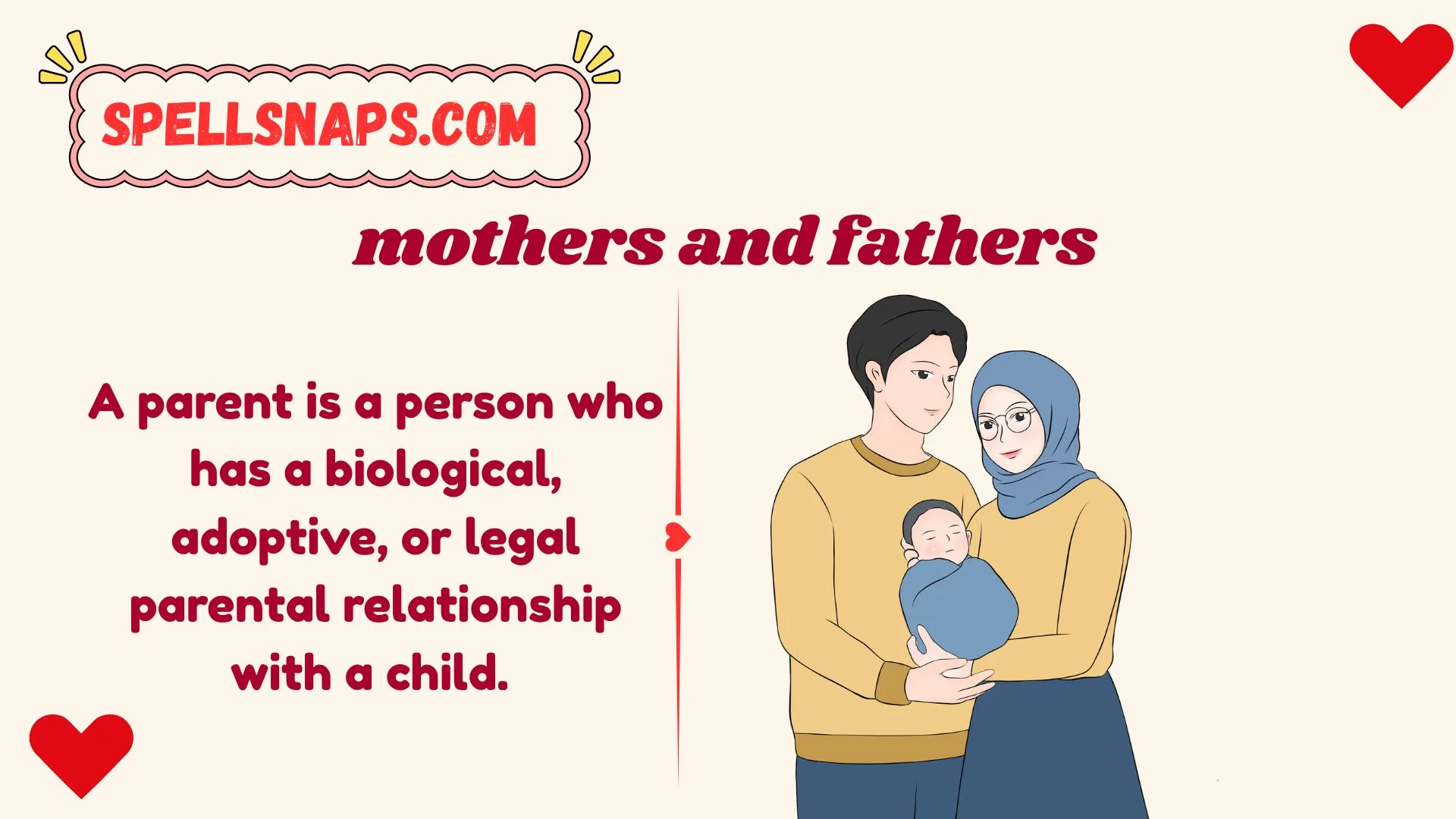
A parent is a person who has a biological, adoptive, or legal parental relationship with a child. Parents are generally the primary caregivers and have natural rights and responsibilities toward their children.
The term applies to:
- Biological Unless you are sure that the group you refer to only consists of people who use this term
- Adoptive parents
- Legal parents recognized by law
How Is a Parent Used?
A parent is responsible for:
- Raising a child
- Providing emotional support
- Meeting basic needs
- Guiding development
- Making major life decisions
In most countries, parents automatically receive parental rights when a child is born or legally adopted.
Examples of Parent in Sentences
- Every parent wants their child to succeed.
- She attended the meeting with her parent.
- His parents encouraged him to pursue higher education.
- Being a parent comes with many responsibilities.
Regional and Grammatical Notes
The word parent is used consistently across English-speaking countries, including the United States, the United Kingdom, Canada, Australia, and New Zealand.
Unlike guardian, which often appears in legal contexts, parent is widely used in both formal and informal situations.
When comparing guardian or parent, remember that a parent usually has a direct legal or biological connection to the child, while a guardian may not.
Historical and Usage Note
The word parent originates from the Latin word parens, meaning “one who gives life” or “brings forth.” Over time, its meaning expanded to include adoptive and legally recognized parental relationships.
Key Differences Between Guardian and Parent
Although a guardian or parent may both care for a child, the source of their authority differs significantly.
Main Differences
- A parent is usually connected through birth or adoption.
- A guardian is often appointed through legal processes.
- Parents automatically receive parental rights in most cases.
- Guardians receive authority through courts or legal documents.
- A guardian may be a relative, family friend, or unrelated individual.
- Parents typically have lifelong parental status, while guardianship may be temporary.
Guardian vs Parent Comparison Table
| Feature | Guardian | Parent |
|---|---|---|
| Relationship to Child | May or may not be related | Usually biological or adoptive |
| Legal Authority Source | Court appointment or legal document | Birth or adoption |
| Biological Connection | Not required | Often present |
| Temporary or Permanent | Can be temporary | Usually permanent |
| Decision-Making Rights | Granted legally | Inherent parental rights |
| Common Context | Legal and protective situations | Family and everyday life |
| Court Involvement | Often required | Usually not required |
| Example | Grandparent appointed by court | Mother or father |
This comparison makes it easier to understand the difference between a guardian or parent in both legal and everyday situations.
Real-Life Conversation Examples
Dialogue 1
Emma: Who signed your school permission form?
Jake: My guardian did.
Emma: I thought your parents signed those forms.
Jake: My grandmother is my legal guardian.
🎯 Lesson: A guardian can legally act for a child even if they are not the parent.
Dialogue 2
Teacher: Please bring a parent to tomorrow’s meeting.
Student: Can my guardian come instead?
Teacher: Yes, your guardian may attend.
🎯 Lesson: Schools often accept either a guardian or parent for official matters.
Dialogue 3
Sarah: Is your uncle your parent?
Michael: No, he’s my guardian.
Sarah: So he takes care of you legally?
Michael: Exactly.
🎯 Lesson: Guardianship does not automatically mean parental status.
Dialogue 4
Doctor: We need consent from a parent or guardian.
Father: I’m his parent.
Aunt: And I’m his temporary guardian while he’s traveling.
🎯 Lesson: Both may have authority, depending on the legal arrangement.
Dialogue 5
Friend: Are guardians and parents the same thing?
Lawyer: Not necessarily. A parent may be a guardian, but a guardian is not always a parent.
🎯 Lesson: The terms can overlap, but they are not identical.
When to Use Guardian vs Parent
Understanding when to use guardian or parent correctly helps you communicate clearly and avoid misunderstandings.
Use “Guardian” When:
- Referring to someone legally responsible for a child
- Discussing court-appointed care
- Completing legal paperwork
- Talking about foster care or custodial arrangements
- Mentioning someone who acts on behalf of a minor
Examples
- Legal guardian
- Court-appointed guardian
- Temporary guardian
- Financial guardian
Use “Parent” When:
- Referring to a mother or father
- Discussing family relationships
- Talking about raising children
- Mentioning biological or adoptive caregivers
Examples
- Parent-teacher conference
- Single parent
- Adoptive parent
- New parent
Easy Memory Tricks
Guardian = Guard
Think of the word guard inside guardian.
A guardian is someone who legally guards and protects another person.
Parent = Family
Think of a parent as part of the child’s direct family relationship through birth or adoption.
Quick Rule
- Legal protection = Guardian
- Family relationship = Parent
Guardian or Parent in Legal Documents
Many official forms use the phrase “parent or guardian.”
You may see it on:
- School applications
- Medical forms
- Travel permissions
- Sports registrations
- Government paperwork
This wording ensures that a child can be represented by either a parent or a legally recognized guardian.
For example:
Signature of Parent or Guardian
This phrase covers both possibilities and prevents legal confusion.
Understanding guardian or parent terminology is especially important when completing official documents.
Common Mistakes People Make
Mistake 1: Assuming Every Guardian Is a Parent
Not true. Many guardians are grandparents, relatives, foster caregivers, or family friends.
Mistake 2: Assuming Every Parent Is Court-Appointed
Parents generally receive their status through birth or adoption, not court appointment.
Mistake 3: Using the Terms Interchangeably in Legal Contexts
In legal situations, choosing the wrong term can create confusion or even affect documentation.
Mistake 4: Ignoring Guardianship Rights
A guardian may have authority equal to or greater than a parent in specific legal circumstances.
FAQs:
Fun Fact #1
In many legal systems, a guardian can be appointed not only for children but also for adults who are unable to manage their own affairs due to disability or incapacity.
Fun Fact #2
The phrase “parent or guardian” appears in countless educational and government forms worldwide because lawmakers recognize that not every child lives with a biological parent.
These facts highlight why understanding guardian or parent distinctions matters in modern society.
Conclusion
The difference between guardian and parent is easier to understand once you know where each role comes from.
A parent is typically connected to a child through birth or adoption and naturally holds parental rights and responsibilities.
A guardian, on the other hand, receives legal authority to care for and protect someone, often through a court appointment or legal arrangement.
While a guardian or parent may perform many of the same daily duties, their legal status and relationship to the child can be very different.
Knowing the distinction helps you communicate accurately in both everyday conversations and official situations.

I’m a passionate writer and content creator with a strong interest in sharing valuable insights, practical knowledge, and engaging information across a variety of topics. I enjoy researching, learning, and transforming complex ideas into clear and easy-to-understand content for readers worldwide. My goal is to provide accurate, helpful, and well-structured articles that inform, educate, and inspire. Through my work, I strive to create content that adds real value and enhances the reader’s experience.