
A brighter, more confident smile can completely transform the way you feel about yourself. If you’ve been researching cosmetic dental treatments, you’ve probably come across the debate of veneers or bonding.
At first glance, these two options seem very similar because both improve the appearance of your teeth. However, they differ in cost, durability, treatment process, and the types of dental problems they solve.
Although they look similar, they serve completely different purposes.
Many people confuse veneers or bonding because both treatments can fix chipped, stained, uneven, or slightly crooked teeth.
Choosing the right one depends on your dental goals, budget, and the condition of your natural teeth. In this guide, you’ll learn everything you need to know about veneers or bonding, including their benefits, differences, real-life examples, and how to decide which option best suits your smile.
What Is “Veneers”?
Veneers are thin, custom-made shells that cover the front surface of your teeth to improve their appearance. They are usually made from porcelain or composite resin and are permanently bonded to the teeth by a dentist.
When discussing veneers or bonding, veneers are generally considered the more durable and premium cosmetic solution.
How Veneers Are Used
Dentists recommend veneers for people who want a long-lasting smile makeover. They can improve:
- Tooth discoloration that whitening cannot fix
- Chipped or cracked teeth
- Small gaps between teeth
- Mildly crooked teeth
- Uneven tooth shape
- Worn-down teeth
Because veneers cover the visible front of each tooth, they create a natural and uniform appearance.
Where Veneers Are Used
Veneers are popular worldwide, especially in countries with advanced cosmetic dentistry, including:
- United States
- Canada
- United Kingdom
- Australia
- European countries
There are no grammar or spelling differences because “veneers” is a universal dental term.
Examples in Sentences
- My dentist recommended veneers to cover my stained front teeth.
- She chose porcelain veneers for a brighter smile.
- His smile completely changed after getting dental veneers.
A Brief History
Dental veneers became popular in the late 20th century after improvements in dental adhesives and porcelain materials. Early versions were temporary and mainly used by actors in Hollywood. Today’s veneers are stronger, thinner, and designed to last many years with proper care.
What Is “Bonding”?
Bonding, also known as dental bonding or composite bonding, is a cosmetic procedure in which a tooth-colored resin is applied directly to a tooth, shaped by the dentist, and hardened using a special curing light.
When comparing veneers or bonding, bonding is often the faster and more affordable option.
How Bonding Is Used
Dental bonding is commonly used to repair:
- Small chips
- Minor cracks
- Tiny gaps
- Tooth discoloration
- Uneven edges
- Slight reshaping of teeth
Unlike veneers, bonding usually requires little or no removal of natural tooth enamel.
Where Bonding Is Used
Composite bonding is widely available in dental clinics around the world.
Both American and British English use the same dental term: bonding.
Examples in Sentences
- My chipped tooth was repaired with bonding in one visit.
- The dentist suggested composite bonding instead of veneers.
- Dental bonding helped close the small gap between her front teeth.
A Brief History
Composite bonding became more common during the 1970s as dental resin technology improved. Modern materials closely match natural tooth color, making repairs almost invisible.
Key Differences Between Veneers and Bonding
When deciding between veneers or bonding, understanding their major differences makes the choice much easier.
Quick Bullet Comparison
- Veneers cover the front surface of teeth.
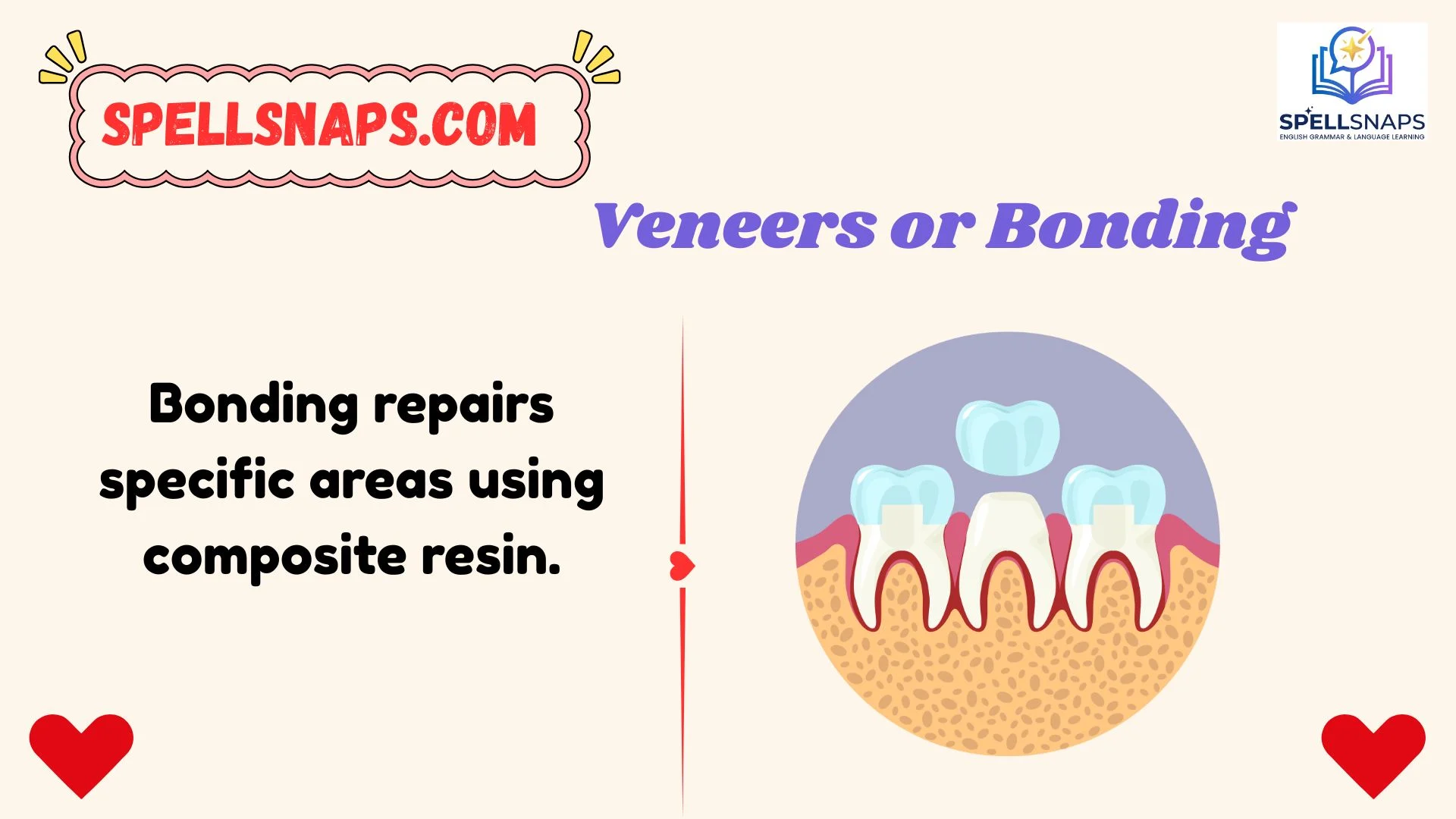
- Bonding repairs specific areas using composite resin.
- Veneers usually last longer.
- Bonding costs less.
- Veneers often require enamel removal.
- Bonding is minimally invasive.
- Veneers resist stains better.
- Bonding may stain over time.
- Veneers usually need two appointments.
- Bonding is often completed in one visit.
Comparison Table
| Feature | Veneers | Bonding |
|---|---|---|
| Material | Porcelain or composite | Composite resin |
| Cost | Higher | Lower |
| Durability | 10–15+ years | 3–7 years |
| Visits Required | Usually two | Usually one |
| Tooth Preparation | Often requires enamel removal | Minimal or none |
| Stain Resistance | Excellent | Moderate |
| Repairability | Usually replaced if damaged | Easily repaired |
| Best For | Full smile makeover | Minor cosmetic repairs |
| Appearance | Highly natural | Natural but less durable |
| Maintenance | Standard oral hygiene | Standard oral hygiene with occasional touch-ups |
Real-Life Conversation Examples
Dialogue 1
Emma: Should I get veneers or bonding?
Dentist: What concerns you most?
Emma: Just one chipped front tooth.
Dentist: Bonding may be all you need.
🎯 Lesson: Bonding is often ideal for small cosmetic repairs.
Dialogue 2
James: I want a complete Hollywood smile.
Dentist: Then porcelain veneers might be your best option.
James: Are they more durable?
Dentist: Yes, they usually last much longer than bonding.
🎯 Lesson: Veneers are better for complete smile transformations.
Dialogue 3
Sarah: Why is bonding cheaper?
Dentist: It uses composite resin and usually takes only one appointment.
Sarah: That makes sense.
🎯 Lesson: Bonding is more affordable because the procedure is quicker and simpler.
Dialogue 4
Alex: Do veneers damage my teeth?
Dentist: Some enamel is often removed before placing them.
Alex: So bonding is less invasive?
Dentist: Exactly.
🎯 Lesson: Bonding preserves more natural tooth structure.
Dialogue 5
Lisa: Which stains less over time?
Dentist: Porcelain veneers resist stains much better.
🎯 Lesson: Veneers maintain their color longer than composite bonding.
When to Use Veneers vs Bonding
Choosing between veneers or bonding depends on your goals, budget, and dental condition.
Choose Veneers If You:
- Want a dramatic smile makeover
- Have several cosmetic concerns
- Need long-lasting results
- Want excellent stain resistance
- Are comfortable with a higher investment
Choose Bonding If You:
- Have one or two chipped teeth
- Need a quick repair
- Want a lower-cost treatment
- Prefer minimal changes to natural teeth
- May want future treatment flexibility
Simple Memory Tricks
Remember these easy tips:
- V = Veneers = Very Long Lasting
- B = Bonding = Budget Friendly
Another easy trick:
Think of veneers as a new cover for your tooth, while bonding is more like repairing a damaged corner.
US vs UK Usage
Unlike many English word comparisons, there is no American or British spelling difference.
Both countries use:
- Veneers
- Dental veneers
- Bonding
- Composite bonding
The procedures and terminology remain the same across English-speaking countries, although treatment costs and materials may vary by dental practice.
Advantages and Disadvantages
Veneers Pros
- Long lifespan
- Excellent cosmetic results
- Natural appearance
- Strong stain resistance
- Ideal for multiple teeth
Veneers Cons
- Higher cost
- Permanent enamel removal
- Replacement rather than repair if damaged
- Requires multiple appointments
Bonding Pros
- Lower cost
- Quick procedure
- Minimal tooth preparation
- Easily repaired
- Often completed in one visit
Bonding Cons
- Shorter lifespan
- More likely to stain
- Less durable
- May require touch-ups
Cost Comparison
One of the biggest questions people ask when researching veneers or bonding is price.
While costs vary depending on location and dentist, here is a general comparison.
| Treatment | Average Cost Per Tooth |
| Composite Bonding | $150–$600 |
| Composite Veneers | $250–$1,500 |
| Porcelain Veneers | $900–$2,500 |
Remember that the cheapest option isn’t always the best value. A treatment that lasts longer may save money over time.
Caring for Veneers and Bonding
Whether you choose veneers or bonding, proper care extends their lifespan.
Follow these tips:
- Brush twice daily.
- Floss every day.
- Visit your dentist regularly.
- Avoid chewing ice.
- Don’t use teeth to open packages.
- Wear a night guard if you grind your teeth.
- Limit coffee, tea, and smoking, especially with bonding.
Good oral hygiene protects both your cosmetic treatment and your natural teeth.
Fun Facts About Veneers and Bonding
1. Hollywood Helped Popularize Veneers ⭐
Movie stars were among the first people to wear veneers to create picture-perfect smiles for the camera.
2. Bonding Can Be Finished in Under an Hour
Many simple bonding procedures take less than 60 minutes, making them one of the quickest cosmetic dental treatments available.
FAQs:
Which lasts longer: veneers or bonding?
Porcelain veneers generally last between 10 and 15 years or more, while bonding usually lasts 3 to 7 years.
Is bonding cheaper than veneers?
Yes. Bonding is usually much more affordable because it requires less material and chair time.
Can bonding look as natural as veneers?
Yes, especially for small repairs. However, porcelain veneers generally provide a more refined and lifelike appearance.
Are veneers permanent?
Yes. Since dentists usually remove a small amount of enamel, veneers are considered a permanent treatment.
Can bonding be replaced later with veneers?
Yes. Many patients start with bonding and later choose veneers for a longer-lasting cosmetic solution.
Conclusion:
Choosing between veneers or bonding comes down to your smile goals, budget, and the condition of your teeth.
Veneers offer outstanding durability, stain resistance, and a complete smile transformation, making them an excellent long-term investment.
Bonding, on the other hand, provides a fast, affordable, and minimally invasive way to repair minor cosmetic flaws while preserving more of your natural tooth structure.
Understanding the strengths and limitations of each treatment helps you make a confident decision with your dentist. Next time someone uses these two words, you’ll know exactly what they mean!

I am a passionate writer and content creator with a strong interest in English grammar, language learning, and effective communication. I enjoy helping readers improve their writing skills through clear, practical, and easy-to-understand content. My goal is to make grammar concepts simple and accessible for learners of all levels. Through my articles, I share useful tips, explanations, and insights that help readers gain confidence in their English language journey. I am committed to providing accurate, engaging, and valuable information that supports continuous learning and personal growth.