
Have you ever spotted a fast-moving bug in your home and wondered whether it was a silverfish or centipede? You’re not alone.
These two creatures often surprise homeowners because they both move quickly, hide in dark places, and appear when you least expect them. At first glance, many people assume they’re the same type of pest, but that’s far from the truth.
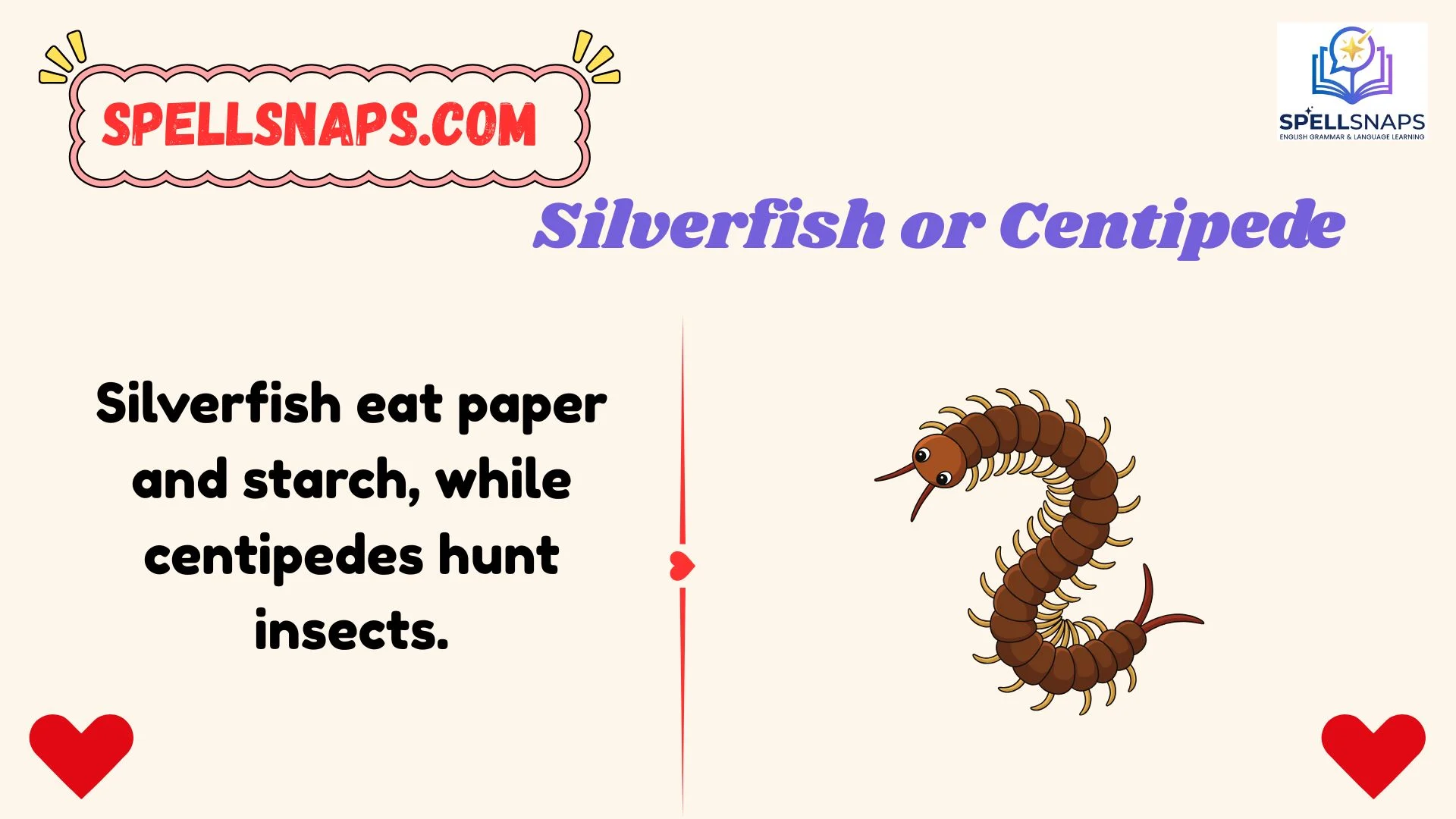
Although they look/sound similar, they serve completely different purposes. A silverfish feeds on paper, glue, and starchy materials, while a centipede is a predator that hunts other insects.
Knowing the difference can help you decide whether you need pest control, simple prevention methods, or no action at all.
In this guide, you’ll learn everything about silverfish or centipede, including how to identify them, where they live, their behavior, and which one is more likely to become a problem in your home.
What Is Silverfish?
A silverfish is a small, wingless insect known for its shiny silver-gray body and fish-like movements. It belongs to one of the oldest insect groups on Earth and has existed for hundreds of millions of years.
When discussing silverfish or centipede, silverfish are usually the easier insect to identify because of their smooth scales, teardrop-shaped body, and three long tail-like bristles.
Characteristics
- Metallic silver or gray color
- About ½ to ¾ inch (12–19 mm) long
- Wingless
- Long antennae
- Three tail filaments
- Fast, wriggling movement
Where Are Silverfish Found?
Silverfish thrive in warm, humid environments. They commonly hide in:
- Bathrooms
- Kitchens
- Basements
- Laundry rooms
- Attics
- Bookcases
- Storage boxes
They are found worldwide, including North America, Europe, Asia, Australia, and many tropical regions.
What Do Silverfish Eat?
Unlike centipedes, silverfish don’t hunt other insects. Instead, they feed on materials rich in starch or cellulose, including:
- Paper
- Books
- Wallpaper paste
- Cardboard
- Glue
- Fabric
- Flour
- Cereal
- Pet food
Because of their diet, they can damage valuable books, photographs, wallpaper, and clothing over time.
Examples in Sentences
- A silverfish damaged several old books stored in the attic.
- We discovered silverfish hiding beneath the bathroom sink.
- Humidity attracted a colony of silverfish to the basement.
Historical Note
Silverfish belong to one of the oldest surviving insect groups, with ancestors dating back over 400 million years, making them older than dinosaurs.
What Is Centipede?
A centipede is a fast-moving arthropod famous for having many pairs of legs and being an active predator. Unlike silverfish, centipedes do not eat paper or fabrics. Instead, they hunt insects and spiders.
When comparing silverfish or centipede, the centipede stands out because of its long body divided into numerous segments, each carrying one pair of legs.
Characteristics
- Flattened body
- Yellow, brown, reddish, or gray coloring
- Long antennae
- One pair of legs per body segment
- Venomous claws near the head
- Extremely fast runner
Despite the name “centipede,” most species have anywhere from 15 to over 300 legs, not exactly 100.
Where Are Centipedes Found?
Centipedes prefer dark, damp environments such as:
- Bathrooms
- Basements
- Crawl spaces
- Garages
- Under rocks
- Gardens
- Leaf piles
House centipedes are common in homes throughout North America, Europe, and many other regions.
What Do Centipedes Eat?
Centipedes help control pest populations by feeding on:
- Cockroaches
- Ants
- Silverfish
- Spiders
- Flies
- Termites
- Crickets
Ironically, if you’re comparing silverfish or centipede, the centipede may actually hunt and eat silverfish.
Examples in Sentences
- A centipede quickly disappeared beneath the washing machine.
- House centipedes help reduce insect populations indoors.
- The gardener found a large centipede under a rock.
Usage Notes
The spelling centipede remains the same in American and British English. There are no regional spelling differences.
Key Differences Between Silverfish and Centipede
Understanding silverfish or centipede becomes much easier once you compare their appearance, behavior, and diet.
Quick Differences
- Silverfish are insects, while centipedes are arthropods.
- Silverfish have six legs; centipedes have many pairs of legs.
- Silverfish eat paper and starch, while centipedes hunt insects.
- Silverfish can damage household belongings.
- Centipedes help reduce other pest populations.
- Silverfish cannot bite humans.
- Some centipedes can bite, although house centipede bites are uncommon and usually mild.
- Silverfish have a smooth, fish-like appearance.
- Centipedes have long segmented bodies with numerous legs.
Comparison Table
| Feature | Silverfish | Centipede |
|---|---|---|
| Classification | Insect | Arthropod |
| Number of Legs | 6 | 15–300+ |
| Diet | Paper, glue, starch | Insects and spiders |
| Appearance | Silver, fish-like | Long, many-legged |
| Body Shape | Teardrop | Segmented |
| Harm to Humans | No | Rare mild bite |
| Household Damage | Yes | No |
| Pest Control Benefit | No | Yes |
| Preferred Habitat | Humid indoor spaces | Damp indoor and outdoor spaces |
| Average Lifespan | 2–8 years | 1–6 years (species dependent) |
Real-Life Conversation Examples
Dialogue 1
Emma: I found something silver crawling across my bathroom floor.
Jake: Was it a silverfish or centipede?
Emma: It only had six legs and looked shiny.
Jake: That’s definitely a silverfish.
🎯 Lesson: Six legs and a metallic body usually indicate a silverfish.
Dialogue 2
Alex: There’s a bug with lots of legs running across the basement!
Sarah: Sounds like a centipede.
Alex: Should I worry?
Sarah: Not much—it probably came looking for other insects.
🎯 Lesson: Centipedes often help control household pests.
Dialogue 3
Lily: My books have tiny holes in them.
Ben: Have you checked for silverfish?
Lily: I thought centipedes caused that.
Ben: No, silverfish are usually responsible for paper damage.
🎯 Lesson: Paper damage almost always points to silverfish.
Dialogue 4
Chris: I keep seeing bugs in my bathroom.
Mia: Are they silver or do they have dozens of legs?
Chris: They’re shiny and tiny.
Mia: Those are probably silverfish.
🎯 Lesson: Body shape is the quickest way to identify these pests.
Dialogue 5
Noah: I found a creepy bug that caught a spider.
Ella: Then it’s almost certainly a centipede.
Noah: Really?
Ella: Yes, centipedes are hunters.
🎯 Lesson: If it’s chasing insects, it’s likely a centipede.
When to Use Silverfish vs Centipede
Knowing when to say silverfish or centipede depends entirely on which creature you’re describing.
Use silverfish when referring to:
- Small silver insects
- Paper-damaging pests
- Bugs found in books or storage boxes
- Wingless insects with six legs
Use centipede when referring to:
- Multi-legged arthropods
- Predators that hunt insects
- Long segmented creatures
- Fast-running hunters in damp areas
Simple Memory Tricks
- Silverfish = Silver + Fish-like movement + Six legs
- Centipede = Century = Many legs
These simple associations make identifying silverfish or centipede much easier.
US vs UK Usage
There is no spelling difference between American and British English.
- Silverfish is correct in both.
- Centipede is correct in both.
The meanings also remain identical worldwide.
Fun Facts and History
1. Silverfish Are Ancient Survivors
Silverfish existed long before dinosaurs. Scientists believe their ancestors appeared over 400 million years ago, making them one of Earth’s oldest living insect groups.
2. Centipedes Are Skilled Hunters
Centipedes use venomous front claws called forcipules to catch prey. While this sounds intimidating, house centipedes usually avoid humans and prefer hunting unwanted insects inside homes.
FAQs:
Is a silverfish more dangerous than a centipede?
No. Silverfish rarely affect people directly, but they can damage books, clothing, wallpaper, and stored food.
Do centipedes eat silverfish?
Yes. House centipedes commonly prey on silverfish along with spiders, cockroaches, ants, and other insects.
Should I remove centipedes from my home?
Many homeowners leave house centipedes alone because they naturally reduce other pest populations. However, frequent sightings may indicate excess moisture or an underlying insect problem.
What attracts silverfish?
Silverfish are attracted to humidity, warmth, darkness, paper products, cardboard, and starchy foods.
Which pest is harder to eliminate?
Silverfish infestations usually require moisture control, sanitation, and sometimes pest treatment. Centipedes are often easier to reduce by eliminating the insects they feed on.
Conclusion:
When comparing silverfish or centipede, the differences are much greater than many people realize. A silverfish is a small, paper-eating insect that can quietly damage household items, while a centipede is a many-legged predator that actually helps control other pests.
Their appearance, diet, number of legs, and role inside your home make them easy to distinguish once you know what to look for.
By understanding these unique characteristics, you’ll be able to identify each creature with confidence and respond appropriately. Next time someone uses these two words, you’ll know exactly what they mean!

I am a passionate writer and content creator with a strong interest in English grammar, language learning, and effective communication. I enjoy helping readers improve their writing skills through clear, practical, and easy-to-understand content. My goal is to make grammar concepts simple and accessible for learners of all levels. Through my articles, I share useful tips, explanations, and insights that help readers gain confidence in their English language journey. I am committed to providing accurate, engaging, and valuable information that supports continuous learning and personal growth.