
Have you ever looked at a bakery menu and wondered whether you should order a tart or a torte? You’re not alone.
Many people confuse these two dessert names because they both refer to delicious baked treats that often appear in cafés, bakeries, and special celebrations.
While they may seem similar at first glance, they are actually very different in their ingredients, texture, appearance, and even their origins.
Although they look/sound similar, they serve completely different purposes. A tart is known for its crisp pastry crust and flavorful filling, while a torte is a rich, dense cake that usually contains little or no flour.
Understanding the difference between tart or torte will help you order desserts with confidence, improve your baking vocabulary, and avoid common misunderstandings in everyday conversations.
What Is “Tart”?
A tart is a baked dessert made with a firm, crisp pastry crust and an open top. Unlike a pie, a tart is usually baked in a shallow pan with straight sides, allowing the filling to remain visible after baking. The filling can be sweet or savory, making tarts one of the most versatile dishes in baking.
When people compare tart or torte, the tart stands out because of its buttery crust and balanced filling rather than its cake-like texture.
How Is a Tart Used?
A tart is commonly served as:
- A dessert with fresh fruit
- A chocolate or custard dessert
- A savory meal with vegetables, cheese, or meat
- A bakery or café specialty
You’ll frequently find fruit tarts displayed in pastry shops because they combine beautiful presentation with fresh ingredients.
Where Is the Word “Tart” Used?
The word tart is widely used in both American English and British English. The meaning remains the same across English-speaking countries.
Interestingly, in British English, “tart” also has informal slang meanings describing a person. However, in cooking and baking, the meaning always refers to the pastry dessert.
Examples of “Tart” in Sentences
- She baked a delicious apple tart for dinner.
- The bakery sells fresh lemon tarts every morning.
- My favorite dessert is a strawberry tart with vanilla cream.
- We ordered a chocolate tart to share.
A Brief History of Tart
The modern tart has roots in medieval European baking, especially in France. French pastry chefs perfected buttery pastry dough and elegant fruit arrangements that are still popular today. Today, French fruit tarts remain among the world’s most recognizable desserts.
What Is “Torte”?
A torte is a rich, dense cake that usually contains very little flour or sometimes none at all. Instead of relying on wheat flour, many tortes are made with ground almonds, hazelnuts, walnuts, breadcrumbs, or chocolate.
When discussing tart or torte, the torte is distinguished by its luxurious texture and layered appearance rather than a pastry shell.
How Is a Torte Used?
A torte is commonly served:
- During birthdays
- At weddings
- During holidays
- In European bakeries
- As a luxurious dessert after formal meals
Many tortes include layers of cream, chocolate ganache, buttercream, fruit preserves, or whipped cream.
Where Is the Word “Torte” Used?
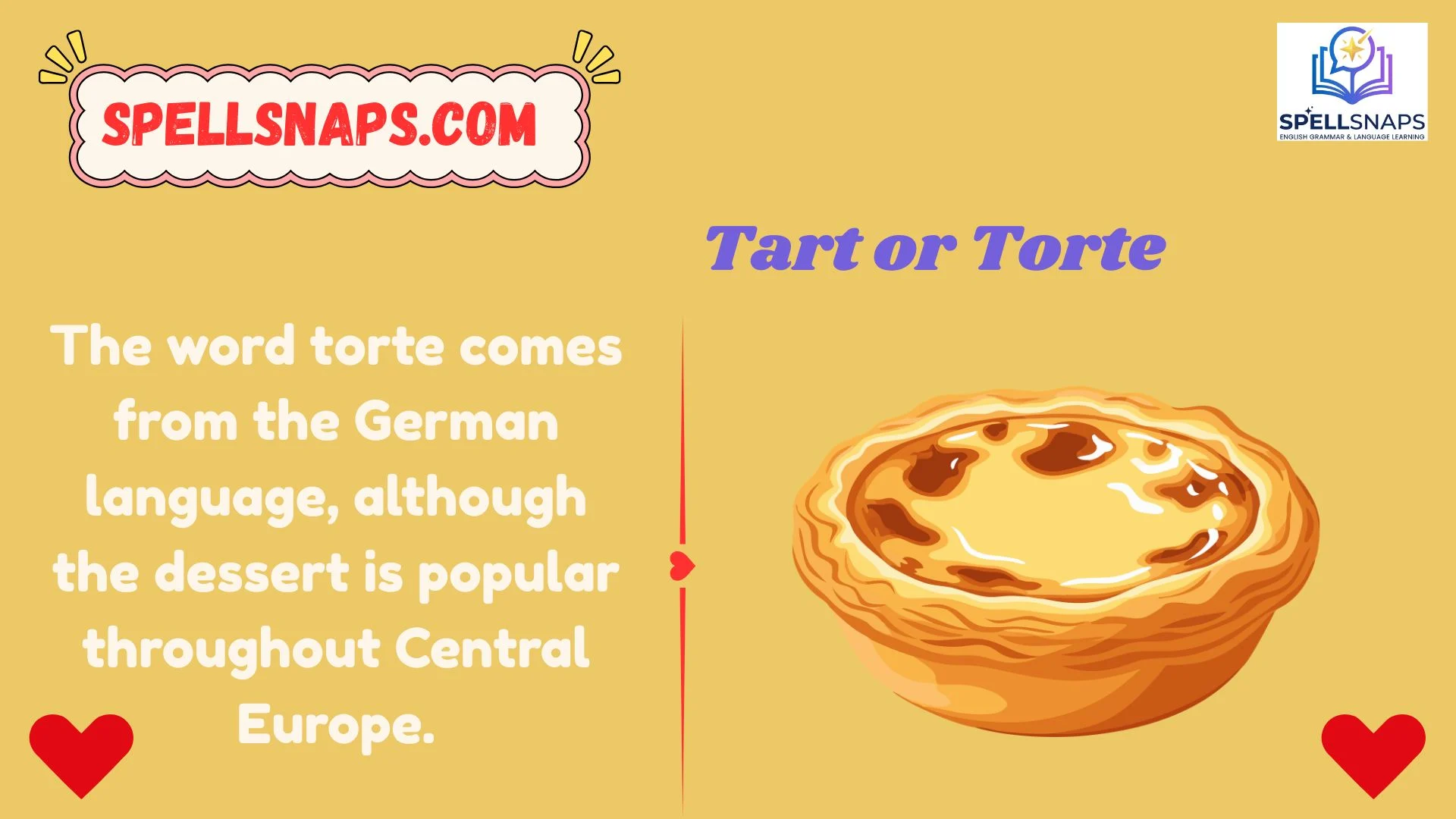
The word torte comes from the German language, although the dessert is popular throughout Central Europe.
You’ll commonly find tortes in:
- Germany
- Austria
- Hungary
- Switzerland
- Czech Republic
English speakers use the original German spelling, torte, rather than changing it.
Examples of “Torte” in Sentences
- We celebrated with a rich chocolate torte.
- The café serves an amazing Black Forest torte.
- She decorated the almond torte with fresh berries.
- Every Christmas my grandmother bakes a traditional walnut torte.
A Brief History of Torte
The torte originated in Central Europe centuries ago. Austrian and German bakers became famous for creating elegant layered cakes using nuts instead of large amounts of flour. Today, famous European tortes remain symbols of fine baking and celebration.
Key Differences Between Tart and Torte
Although discussions about tart or torte often focus on appearance, there are several important differences.
Quick Differences
- A tart has a pastry crust; a torte does not.
- A tart is open-faced; a torte is a cake.
- A tart can be sweet or savory; a torte is almost always sweet.
- A tart uses pastry dough; a torte relies on eggs, nuts, and chocolate.
- A tart is lighter; a torte is richer and denser.
- Tarts often feature fruit or custard fillings, while tortes frequently include layered fillings or frosting.
- Tarts are common in French baking; tortes are closely associated with German and Austrian baking traditions.
Comparison Table
| Feature | Tart | Torte |
|---|---|---|
| Type | Pastry dessert | Rich cake |
| Crust | Yes | No |
| Texture | Crisp, buttery | Dense, moist |
| Flour | Standard pastry flour | Little or no flour |
| Main Ingredients | Pastry shell, fruit, custard | Eggs, nuts, chocolate |
| Sweet or Savory | Both | Mostly sweet |
| Origin | France and Western Europe | Germany and Central Europe |
| Appearance | Open top | Layered cake |
| Common Occasions | Everyday desserts, cafés | Celebrations and formal events |
| Examples | Fruit tart, lemon tart | Chocolate torte, walnut torte |
Real-Life Conversation Examples
Dialogue 1
Emma: Should we order the chocolate tart?
Ryan: That’s actually a chocolate torte.
Emma: What’s the difference?
Ryan: The torte is a rich cake, while the tart has a pastry crust.
🎯 Lesson: Look for the crust. If there’s no pastry shell, it’s probably a torte.
Dialogue 2
Customer: I’d like the strawberry torte.
Baker: Do you mean the strawberry tart?
Customer: Oh yes! I wanted the pastry with fresh fruit.
🎯 Lesson: Fruit displayed on a pastry shell usually means it’s a tart.
Dialogue 3
Lily: I’m baking for Grandma’s birthday.
Noah: Make a torte. She loves chocolate cakes.
Lily: Good idea. I’ll save the tart for our picnic.
🎯 Lesson: Tortes are popular celebration cakes, while tarts work well for casual occasions.
Dialogue 4
Alex: This dessert feels incredibly rich.
Sophia: That’s because it’s a hazelnut torte.
Alex: Now I understand why it’s denser than a tart.
🎯 Lesson: A dense texture usually points to a torte.
Dialogue 5
Friend: Is quiche a torte?
Chef: No, it’s actually a savory tart.
Friend: That makes much more sense!
🎯 Lesson: Savory dishes almost always fall into the tart category.
When to Use Tart vs Torte
Understanding tart or torte becomes much easier when you remember a few practical rules.
Use “Tart” When:
- The dessert has a pastry shell.
- The filling is visible.
- You’re talking about fruit, custard, or savory fillings.
- The dessert is open on top.
- You’re describing pastries in bakeries.
Use “Torte” When:
- The dessert is a rich cake.
- Nuts or chocolate replace much of the flour.
- The cake has multiple layers.
- You’re describing formal European desserts.
- The dessert is dense and moist.
Easy Memory Tricks
- Tart = Tray of pastry.
- Torte = Thick cake.
- Tart has a crust.
- Torte is layered and rich.
These simple reminders make remembering tart or torte much easier.
US vs UK Usage
Both American English and British English use the terms tart and torte in the same culinary sense. There are no significant spelling differences between the two varieties of English for these dessert names.
However, you’ll generally encounter tarts more often in everyday bakeries, while tortes are especially common in European-style pastry shops and upscale dessert menus.
Fun Facts and History
1. The Famous Sachertorte
One of the world’s most famous desserts is the Sachertorte, a rich chocolate torte created in Vienna, Austria, in 1832. It remains one of the country’s signature desserts and attracts visitors from around the world.
2. Not Every Fruit Dessert Is a Tart
Many people mistakenly call any fruit dessert a tart. In reality, only desserts with a pastry shell qualify as tarts. Fruit cakes, cheesecakes, and layered desserts belong to entirely different categories.
Common Mistakes People Make
Even experienced home bakers sometimes mix up these dessert names. Here are some of the most common mistakes:
- Calling any rich chocolate cake a tart.
- Assuming every fruit dessert is a tart.
- Thinking tortes always contain flour.
- Believing tarts must always be sweet.
- Using the two names interchangeably on menus.
Keeping the basic structure of each dessert in mind will help you avoid these mistakes.
Why Knowing the Difference Matters
Learning the distinction between tart or torte is useful for more than simply expanding your vocabulary. It helps you understand recipes correctly, order desserts with confidence, communicate clearly with bakers, and appreciate different baking traditions from around the world.
If you’re following a recipe, choosing the correct dessert type can dramatically affect the final result because the ingredients, baking methods, and textures are completely different.
Whether you’re baking at home or enjoying desserts at your favorite café, recognizing these differences makes every sweet experience a little more enjoyable.
Conclusion
Although tart and torte are both delicious desserts, they belong to two very different categories. A tart features a crisp pastry crust with sweet or savory fillings, while a torte is a rich, dense cake often made with nuts, chocolate, or minimal flour.
Knowing these differences makes it easier to read recipes, explore bakery menus, and talk confidently about desserts.
The next time you’re deciding between a tart or a torte, simply remember: crust means tart, while layered richness means torte. Next time someone uses these two words, you’ll know exactly what they mean!

I am a passionate writer and content creator with a strong interest in English grammar, language learning, and effective communication. I enjoy helping readers improve their writing skills through clear, practical, and easy-to-understand content. My goal is to make grammar concepts simple and accessible for learners of all levels. Through my articles, I share useful tips, explanations, and insights that help readers gain confidence in their English language journey. I am committed to providing accurate, engaging, and valuable information that supports continuous learning and personal growth.