
Pain, bleeding, or discomfort during bowel movements can be alarming, and many people immediately wonder whether they have a fissure or hemorrhoids.
Since both conditions affect the anal area and often share similar symptoms, it’s easy to confuse them.
However, receiving the right diagnosis is important because each condition has different causes, treatments, and recovery times.
Although they look/sound similar, they serve completely different purposes. In this case, they aren’t different words with similar meanings they’re two separate medical conditions that require different approaches to care.
Understanding the difference between fissure or hemorrhoids can help you recognize symptoms earlier, seek appropriate treatment, and avoid unnecessary discomfort.
What Is Fissure?
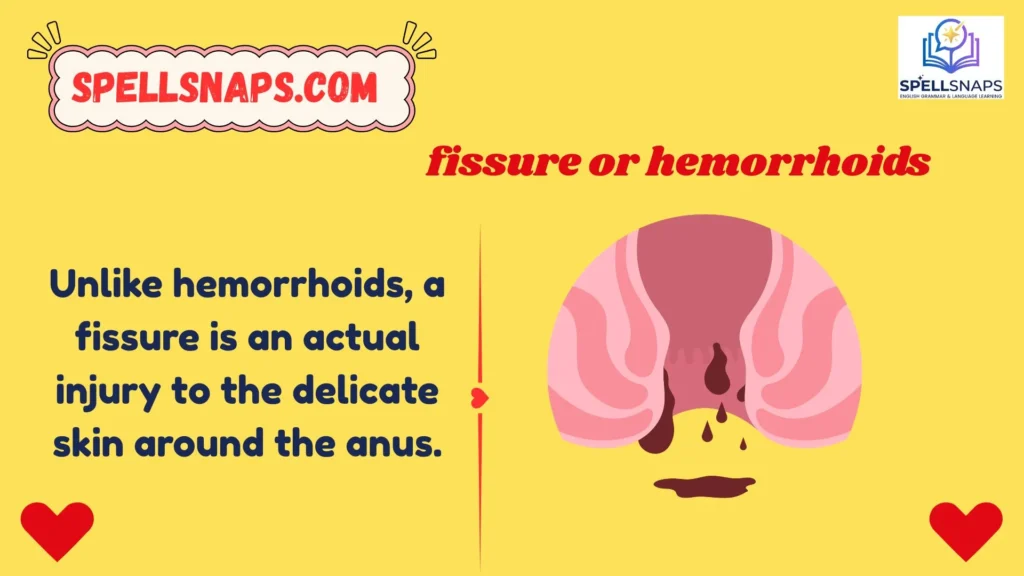
An anal fissure is a small tear or crack in the lining of the anus. It usually develops after passing a hard or large stool, but it can also occur due to chronic constipation, frequent diarrhea, childbirth, or excessive straining.
Unlike hemorrhoids, a fissure is an actual injury to the delicate skin around the anus.
How Is a Fissure Used in Medical Context?
Doctors use the term anal fissure to describe a tear that causes pain and bleeding during bowel movements.
When discussing fissure or hemorrhoids, a fissure generally causes:
- Sharp, cutting pain during bowel movements
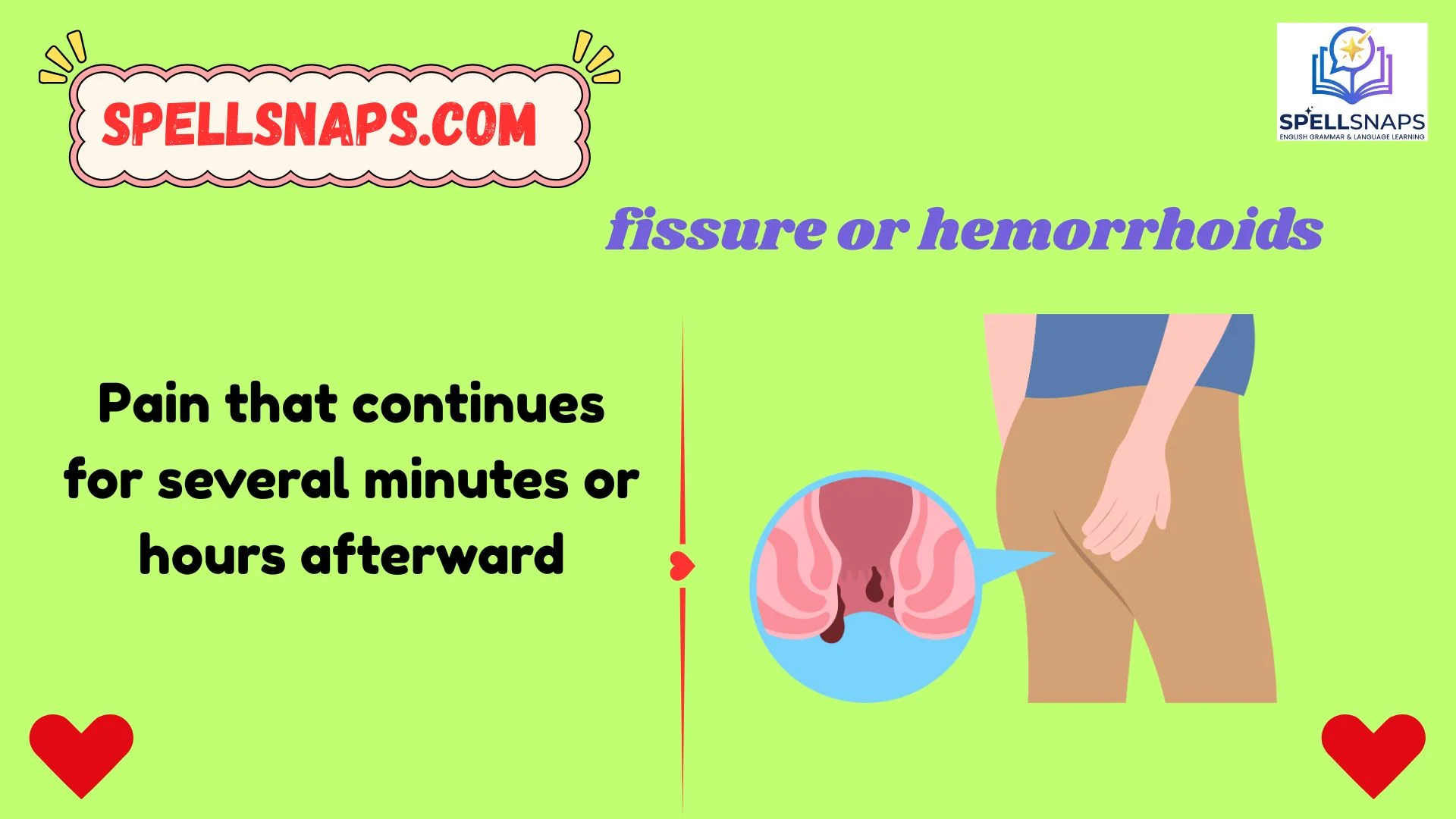
- Pain that continues for several minutes or hours afterward
- Bright red blood on toilet paper
- A visible crack near the anus
- Muscle spasms around the anal sphincter
Many people experience intense discomfort because the tear repeatedly opens every time they pass stool.
Where Is the Term Used?
The medical term anal fissure is used worldwide.
There are no differences between American and British English regarding the spelling or meaning. Healthcare professionals everywhere use the same terminology.
Example Sentences
- The doctor diagnosed me with an anal fissure after my examination.
- Severe constipation caused a painful fissure.
- My fissure healed after increasing fiber and drinking more water.
- Warm sitz baths helped reduce the pain from my fissure.
Brief Historical Note
Medical descriptions of anal fissures date back centuries. Modern treatments have improved significantly thanks to better understanding of wound healing, diet, and muscle relaxation therapies.
What Are Hemorrhoids?
Hemorrhoids, sometimes called piles, are swollen or enlarged veins inside or around the anus and rectum. Everyone has hemorrhoidal tissue, but problems occur when these veins become enlarged or inflamed.
When comparing fissure or hemorrhoids, hemorrhoids involve blood vessels rather than torn skin.
Types of Hemorrhoids
Internal Hemorrhoids
- Located inside the rectum
- Usually painless
- Often cause painless bleeding
- May prolapse outside the anus
External Hemorrhoids
- Located beneath the skin around the anus
- Can become swollen and painful
- May itch or develop blood clots
Common Symptoms
People comparing fissure or hemorrhoids often notice symptoms such as:
- Bright red bleeding
- Itching
- Swelling
- A lump around the anus
- Mild discomfort
- Mucus discharge
- Feeling of incomplete bowel emptying
Unlike fissures, hemorrhoids usually produce pressure, itching, or aching rather than sharp tearing pain.
Where Is the Term Used?
The word hemorrhoids is standard in American English.
In British English and many Commonwealth countries, people commonly use the word haemorrhoids. The spelling differs, but the condition is exactly the same.
Example Sentences
- My doctor confirmed I have external hemorrhoids.
- Pregnancy can increase the risk of hemorrhoids.
- Sitting too long made my hemorrhoids worse.
- Fiber supplements reduced my hemorrhoid symptoms.
Brief Historical Note
References to hemorrhoids appear in some of the oldest medical writings, including ancient Egyptian and Greek texts. Modern medicine now offers treatments ranging from lifestyle changes to minimally invasive procedures.
Key Differences Between Fissure or Hemorrhoids
Although these conditions affect the same general area, they differ in several important ways.
Quick Differences
- A fissure is a tear; hemorrhoids are swollen veins.
- Fissures usually cause sharp pain, while hemorrhoids often cause itching, pressure, or swelling.
- Fissures commonly result from constipation or passing hard stools.
- Hemorrhoids develop due to increased pressure on rectal veins.
- Bleeding from both conditions is usually bright red.
- Fissures often heal naturally with conservative treatment.
- Hemorrhoids may require medical procedures if severe.
Comparison Table
| Feature | Fissure | Hemorrhoids |
|---|---|---|
| Definition | Small tear in anal lining | Swollen veins in anus or rectum |
| Main Cause | Hard stool, constipation, trauma | Increased vein pressure |
| Pain | Sharp and severe | Mild to moderate, unless thrombosed |
| Bleeding | Bright red during bowel movement | Bright red during or after bowel movement |
| Itching | Less common | Very common |
| Lump | Usually absent | Often present |
| Healing | Often heals naturally | May persist or recur |
| Treatment | Fiber, fluids, sitz baths, medication | Lifestyle changes, creams, procedures if needed |
| Risk Factors | Constipation, childbirth | Pregnancy, obesity, prolonged sitting, constipation |
Real-Life Conversation Examples
Dialogue 1
Emma: I noticed blood after using the bathroom.
David: Do you have pain?
Emma: Yes, it feels like I’m being cut.
David: That sounds more like a fissure than hemorrhoids.
🎯 Lesson: Sharp pain with bleeding often points toward a fissure.
Dialogue 2
Lisa: I have a painful lump near my anus.
Mark: Does it itch too?
Lisa: Yes, quite a bit.
Mark: Your doctor may check for hemorrhoids.
🎯 Lesson: Swelling and itching are more common with hemorrhoids.
Dialogue 3
Sarah: I thought hemorrhoids always caused severe pain.
Nurse: Actually, many internal hemorrhoids aren’t painful at all.
🎯 Lesson: Internal hemorrhoids often bleed without causing significant pain.
Dialogue 4
John: Every bowel movement feels like glass.
Doctor: That description strongly suggests an anal fissure.
🎯 Lesson: Intense cutting pain is a classic fissure symptom.
Dialogue 5
Anna: Can constipation cause both?
Doctor: Yes. Constipation is one of the biggest risk factors for both conditions.
🎯 Lesson: Preventing constipation helps reduce the risk of fissures and hemorrhoids.
When to Use Fissure vs Hemorrhoids
Understanding fissure or hemorrhoids becomes much easier when you remember what each condition actually is.
Use fissure when talking about:
- A tear in the anal skin
- Severe pain during bowel movements
- Pain lasting after passing stool
- Small cracks or wounds
Use hemorrhoids when referring to:
- Enlarged veins
- Swelling or lumps
- Itching
- Pressure around the anus
- Internal or external piles
Simple Memory Tricks
- Fissure = Fracture-like tear.
- Hemorrhoids = Heavy swollen veins.
- Tear equals fissure.
- Swollen veins equal hemorrhoids.
US vs UK Usage
The medical conditions are identical everywhere.
Only the spelling changes:
| Region | Preferred Spelling |
|---|---|
| United States | Hemorrhoids |
| United Kingdom | Haemorrhoids |
| Canada | Both spellings may appear |
| Australia | Haemorrhoids |
The word fissure is spelled the same in all English-speaking countries.
Symptoms That Require Medical Attention
Although many cases improve with home care, some symptoms require prompt evaluation by a healthcare professional.
Seek medical advice if you experience:
- Heavy rectal bleeding
- Black or tarry stools
- Severe ongoing pain
- Fever
- Persistent symptoms lasting more than a few weeks
- A rapidly enlarging painful lump
- Unexplained weight loss along with rectal bleeding
These symptoms may indicate conditions other than a fissure or hemorrhoids and deserve proper assessment.
Common Treatments
Treating an Anal Fissure
Most acute fissures improve with conservative care, including:
- High-fiber foods
- Drinking plenty of water
- Stool softeners if recommended
- Warm sitz baths
- Prescription creams to relax the anal sphincter
- Good bathroom habits that avoid straining
Chronic fissures may occasionally require minor surgery.
Treating Hemorrhoids
Treatment depends on severity and may include:
- Increasing dietary fiber
- Staying hydrated
- Avoiding prolonged sitting
- Regular exercise
- Over-the-counter creams
- Sitz baths
- Rubber band ligation
- Infrared coagulation
- Surgical removal for severe cases
Preventing Both Conditions
Many healthy habits help prevent both fissures and hemorrhoids.
These include:
- Eating 25–38 grams of fiber daily
- Drinking enough water
- Exercising regularly
- Responding promptly to the urge to have a bowel movement
- Avoiding prolonged sitting on the toilet
- Maintaining a healthy body weight
- Limiting excessive straining
Small lifestyle changes often make a significant difference over time.
Fun Facts and History
📌 Fact 1
Ancient Egyptian medical texts described hemorrhoids more than 3,500 years ago, making them one of the oldest documented health conditions.
📌 Fact 2
Many people assume every case of rectal bleeding is caused by hemorrhoids. In reality, doctors consider many possible causes, which is why persistent bleeding should always be evaluated rather than self-diagnosed.
FAQs:
Can you have both a fissure and hemorrhoids?
Yes. Constipation and straining can contribute to both conditions at the same time.
Which hurts more?
A fissure typically causes more intense, sharp pain than uncomplicated hemorrhoids.
Do hemorrhoids always bleed?
No. Some hemorrhoids itch or swell without bleeding.
Can fissures heal naturally?
Yes. Many acute fissures heal within several weeks with proper self-care and healthy bowel habits.
Should I see a doctor?
If symptoms are severe, recurrent, or include significant bleeding, it’s important to seek medical evaluation to confirm the diagnosis and rule out other conditions.
Conclusion:
Understanding the difference between fissure or hemorrhoids helps you recognize symptoms more accurately and seek the right treatment sooner.
A fissure is a tear in the anal lining that usually causes sharp pain, while hemorrhoids are swollen veins that often lead to itching, swelling, or painless bleeding.
Although both conditions can share similar symptoms, they have different causes, treatments, and recovery paths.
If your symptoms persist, worsen, or involve significant bleeding, consult a qualified healthcare professional for an accurate diagnosis. Next time someone uses these two words, you’ll know exactly what they mean!

I am a passionate writer and content creator with a strong interest in English grammar, language learning, and effective communication. I enjoy helping readers improve their writing skills through clear, practical, and easy-to-understand content. My goal is to make grammar concepts simple and accessible for learners of all levels. Through my articles, I share useful tips, explanations, and insights that help readers gain confidence in their English language journey. I am committed to providing accurate, engaging, and valuable information that supports continuous learning and personal growth.